

Evidence is at the heart of meaningful and sustainable change. For gender equality to move from policy commitments to measurable progress, Kenya needs research that is relevant, inclusive, coordinated and translated into action. FAWE Kenya joined stakeholders at the Kenya Institute of Curriculum Development (KICD) for the dissemination forum of the National Gender Research Agenda (NGRA) for Kenya, convened by the National Gender and Equality Commission (NGEC).
The dissemination of the NGRA marks an important step towards strengthening Kenya’s gender research ecosystem and ensuring that evidence is better connected to policy, programming, advocacy and decision-making.
Why this matters
Kenya has made significant progress in establishing a legal and policy framework for gender equality. However, persistent inequalities continue to affect women and girls, including barriers to education and skills development, economic participation, leadership and access to opportunities.
These challenges require more than assumptions. They require evidence that helps us understand who is being left behind, why inequalities persist, what interventions are working, and where greater investment and action are needed.
The NGRA provides an opportunity to address some of these challenges by promoting stronger coordination of gender research, improving access to disaggregated data, strengthening research capacity and fostering collaboration among researchers, policymakers, government institutions, civil society, academia, development partners and other stakeholders.
Connecting gender research with education
For FAWE Kenya, the NGRA has relevance to the education sector.
Education is both a powerful pathway towards gender equality and an area where inequalities can be reproduced. Research can help us better understand the barriers that girls and young women face, including those related to poverty, disability, geographical location, social norms, digital exclusion, gender-based violence and other intersecting factors.
The research agenda also creates space to explore emerging issues such as technology and Artificial Intelligence, climate change, the digital divide and changing forms of inequality — issues that will increasingly shape the education and development landscape.
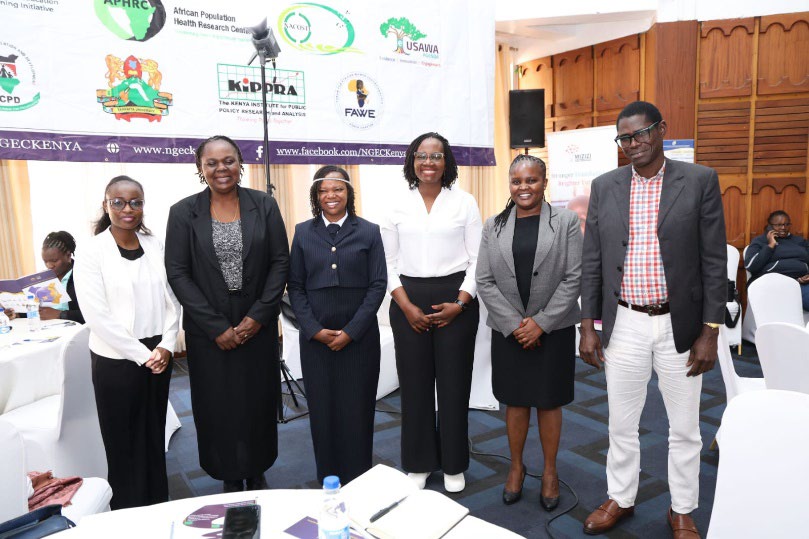
From evidence to impact
The real value of a research agenda is not simply in producing more research. It is in ensuring that research is relevant, accessible and used.
This calls for stronger connections between evidence producers and evidence users. Researchers need opportunities to engage policymakers and practitioners. Policymakers need timely and accessible evidence. Development partners and funders need to invest in priority research areas. And communicators have a critical role in translating complex evidence into knowledge that communities and decision-makers can understand and use.
The success of the NGRA will therefore depend on collective action: stronger partnerships, investment in priority research, better data, effective knowledge sharing and deliberate efforts to translate evidence into policy and practice.
Evidence should not merely describe inequality. It should help us dismantle it.
As Kenya advances the National Gender Research Agenda, FAWE Kenya remains committed to contributing to a gender-responsive evidence ecosystem that strengthens education, informs policy and helps create a more just and inclusive society.
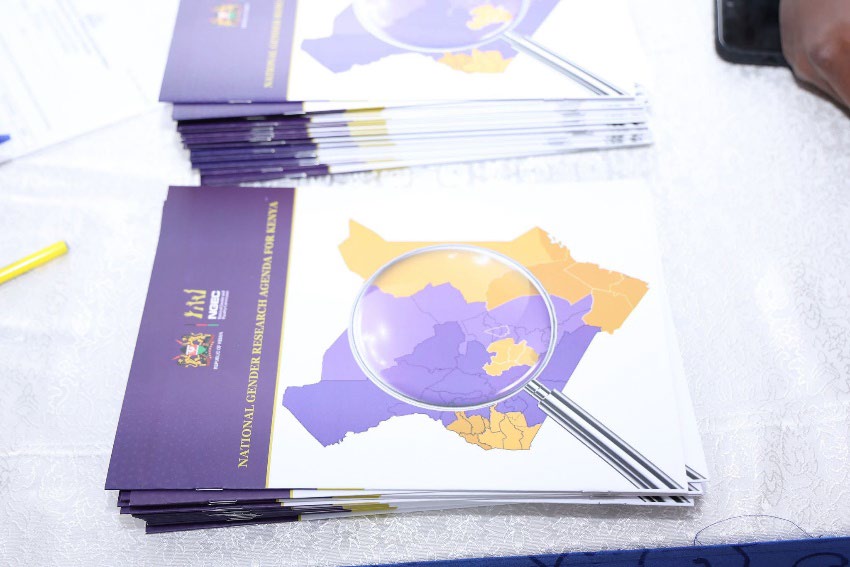
#From research to action. From evidence to impact.